Japan Travel Insights
From Interviews to Insights
Understanding why (and how) people want to visit Japan - and transforming survey responses into a living dataset and self-service decision tool for tourism strategy.
Executive Summary
Tourism stakeholders often rely on on-site interviews to understand visitor intent, motivations, and barriers. While qualitative insights are valuable, this approach is rarely scalable and makes it difficult to compare segments or track trends over time.
Japan Travel Insights is an end-to-end analytics product that transforms a manual interview process into a scalable survey pipeline: bilingual data collection, automated cleaning and standardization, and a Streamlit dashboard designed for self-service exploration.
Business Problem
During a stay in Japan, I collaborated with a tourism-related stakeholder, a company supporting the Yamagata prefecture to better understand international tourism. The team’s initial approach relied on 15–20 minute face-to-face interviews in touristic spots.
This created three structural issues:
- high operational effort.
- limited reach (only people physically present).
- low scalability (some days: few or no foreign tourists).
The stakeholder needed a scalable way to collect responses over time, segment audiences (age, country, motivations, barriers), and access insights without technical dependency.
Solution Overview
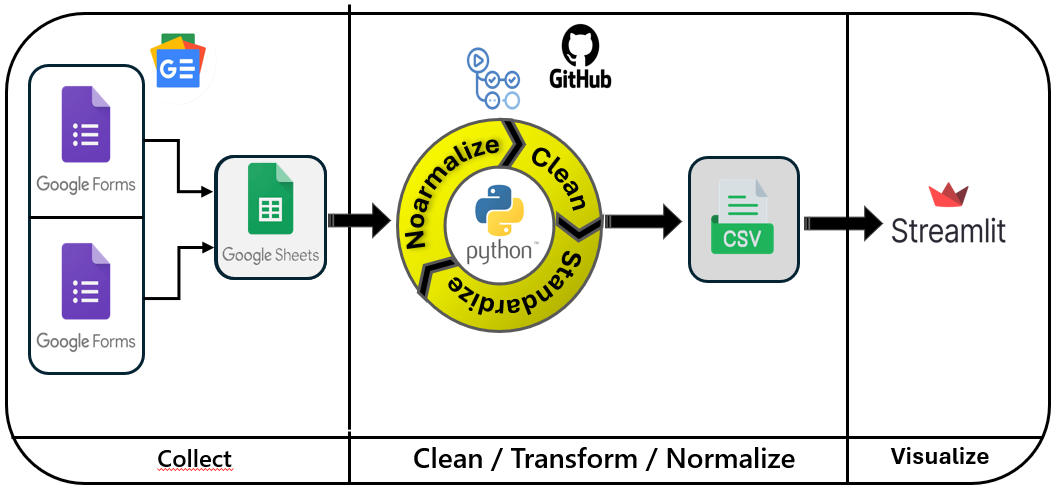
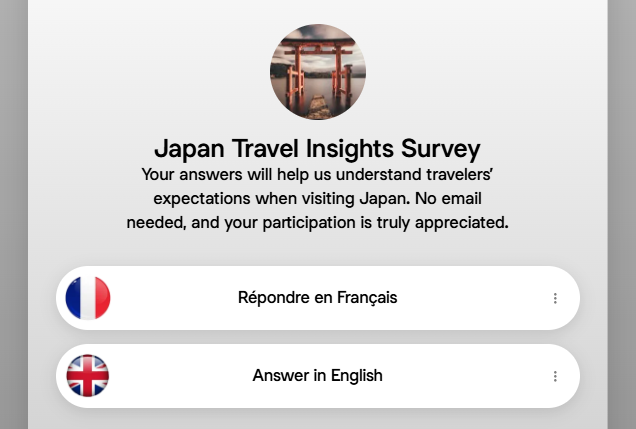
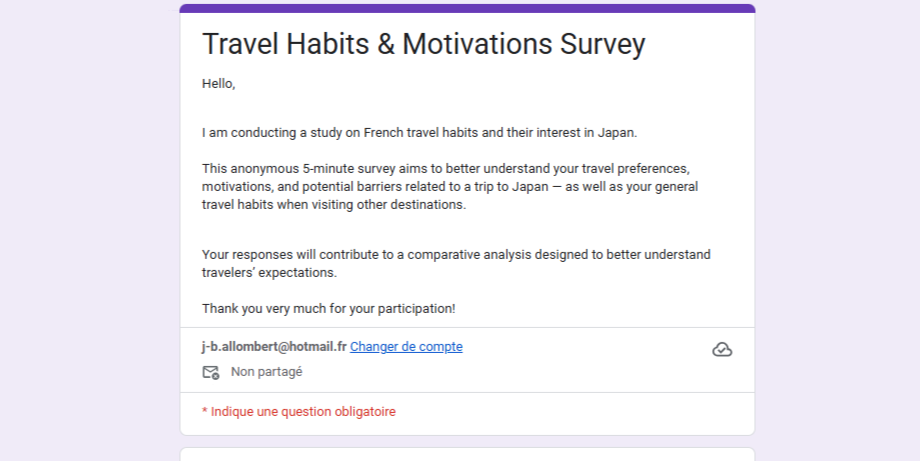
I designed and implemented a complete data workflow that replaces manual collection with a scalable, automated process. The system is built around Google Forms for bilingual collection, Google Sheets as a source of truth, Python for cleaning/standardization, GitHub Actions for orchestration, and Streamlit for delivery.
Pipeline Workflow (End-to-End)
The workflow below illustrates the real architecture used in the project:
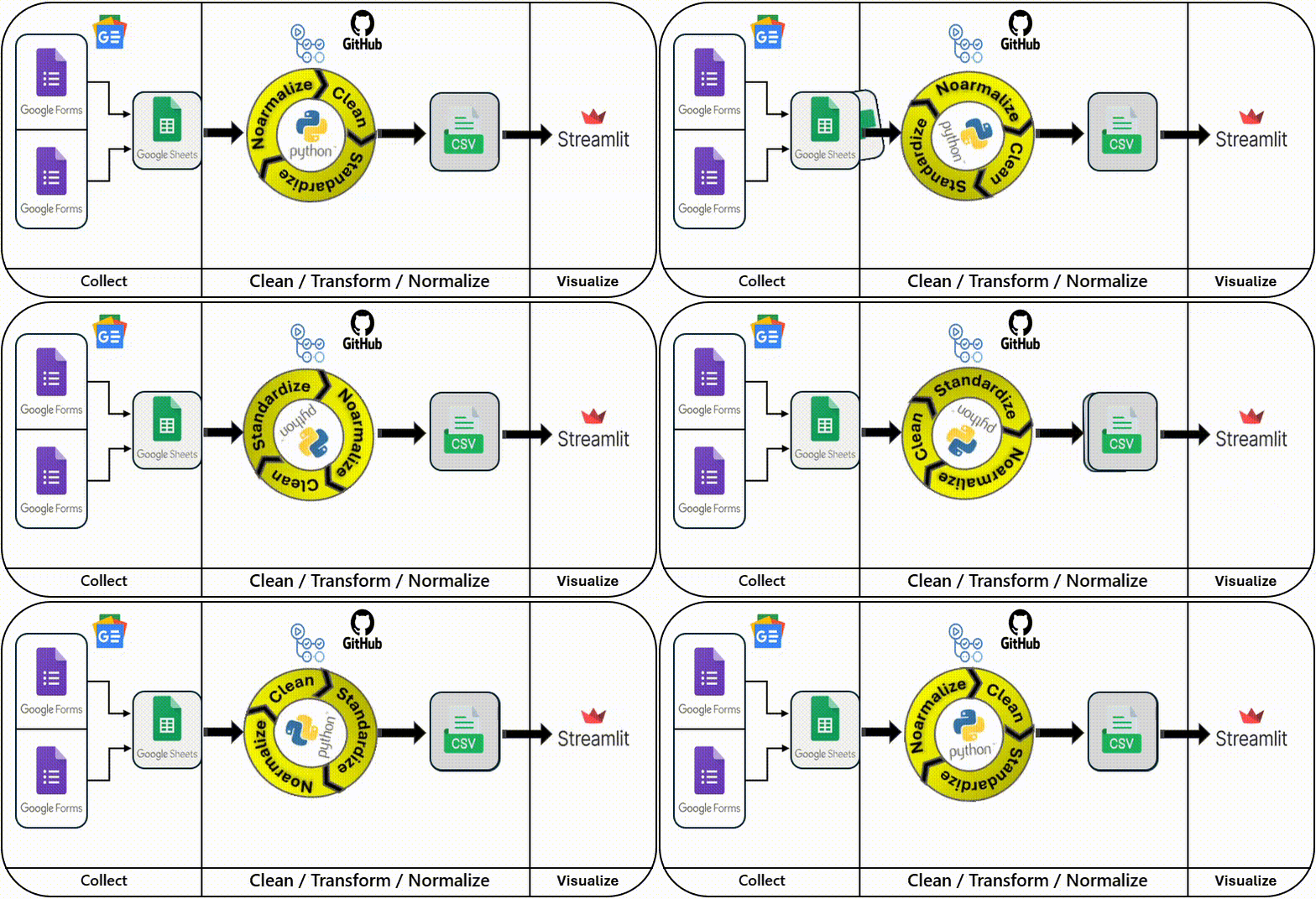
Google Forms (FR/EN) → Google Sheets → Python (Clean/Transform/Normalize) → CSV in GitHub → Streamlit Dashboard
Business Impact
This project delivers immediate value for tourism stakeholders by shifting from local, manual interviews to a data product that can scale online and stay updated over time.
broader reach, reduced effort, consistent segmentation, and faster decision-making through a self-service dashboard.
Practically, the stakeholder can : segment audiences (who is interested, why, what blocks them), identify preferred destinations, and export filtered datasets for further work in Excel or BI tools.
This shifts tourism research from anecdotal insights to repeatable, segment-driven decision-making.
Key Insights
The dashboard enables stakeholders to move beyond surface-level metrics and uncover strategic patterns across the traveler lifecycle.
- High demand, low conversion :
Interest in visiting Japan is very high, especially among first-time travelers. The main challenge is not awareness but conversion, driven by perceived friction rather than lack of desire. - Travel maturity over age :
Travel behavior evolves more with travel maturity than age alone. First-time and repeat travelers exhibit fundamentally different motivations, risk perceptions, and destination choices. - Iconic concentration vs regional diversification :
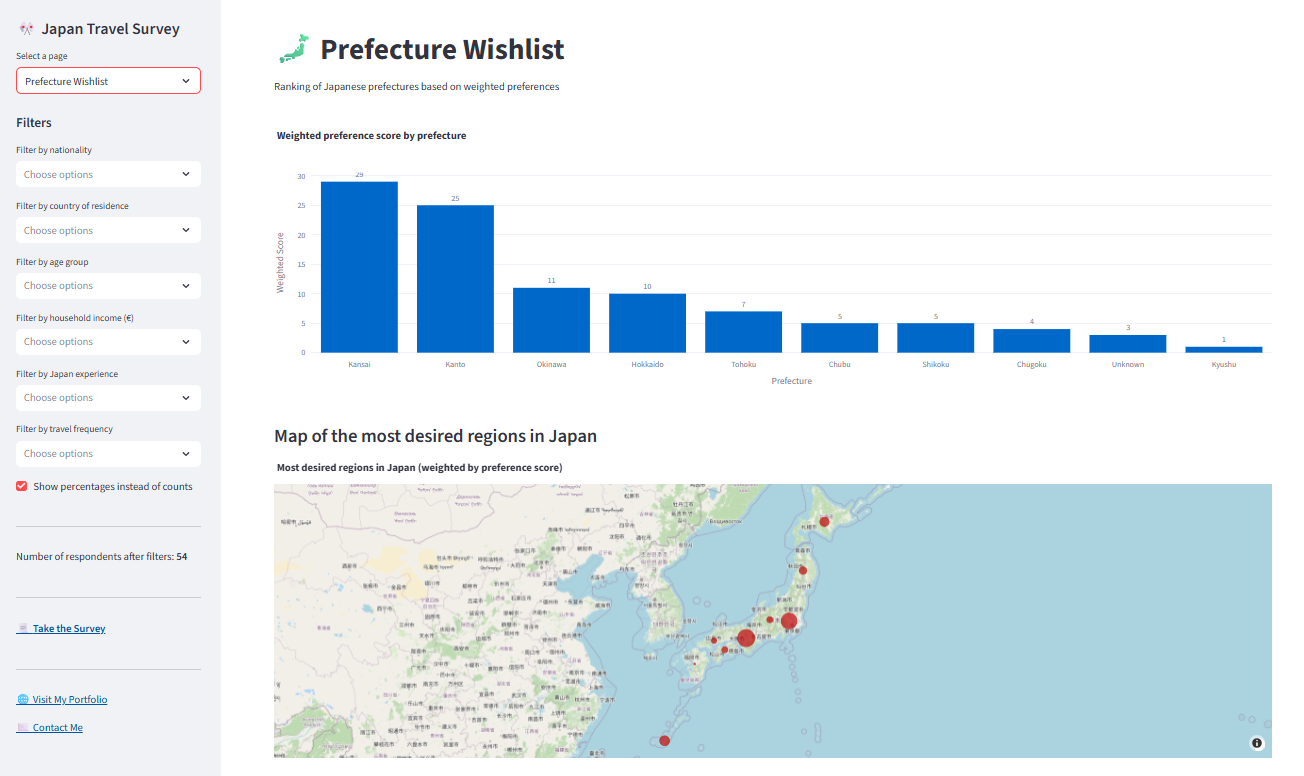
First-time travelers focus almost exclusively on iconic regions (Kanto, Kansai), while repeat travelers show significantly greater interest in secondary regions such as Tohoku and Shikoku. - Shift from discovery to depth :
Motivations evolve from culture and gastronomy toward nature, wellness, and slower experiences as travelers gain familiarity with Japan. - Language as a structural barrier :
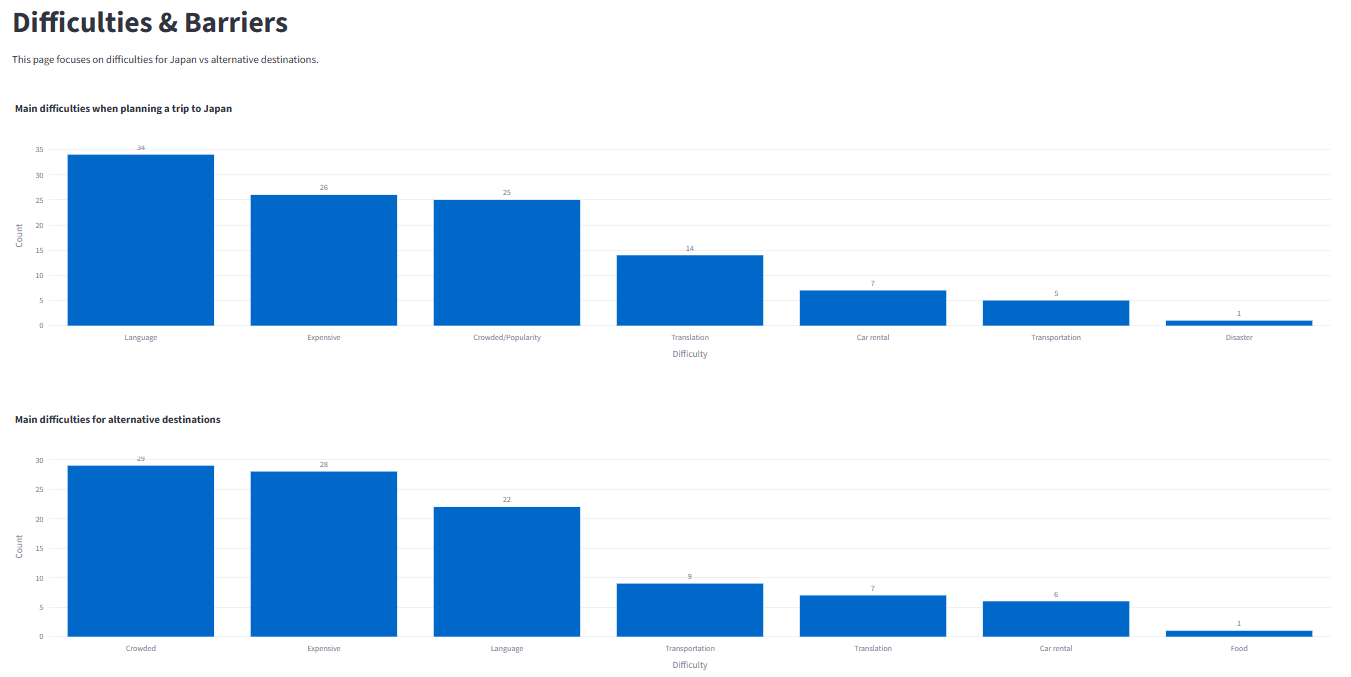
Language remains a dominant perceived barrier across all traveler profiles, including repeat visitors, indicating a structural friction in the travel experience.
These insights illustrate how survey data can be transformed into lifecycle-aware tourism strategies rather than static reporting.
Regional tourism growth is best achieved by targeting repeat travelers with lifecycle-aware strategies, positioning secondary regions as extensions of iconic destinations rather than standalone alternatives.
Interactive Dashboard
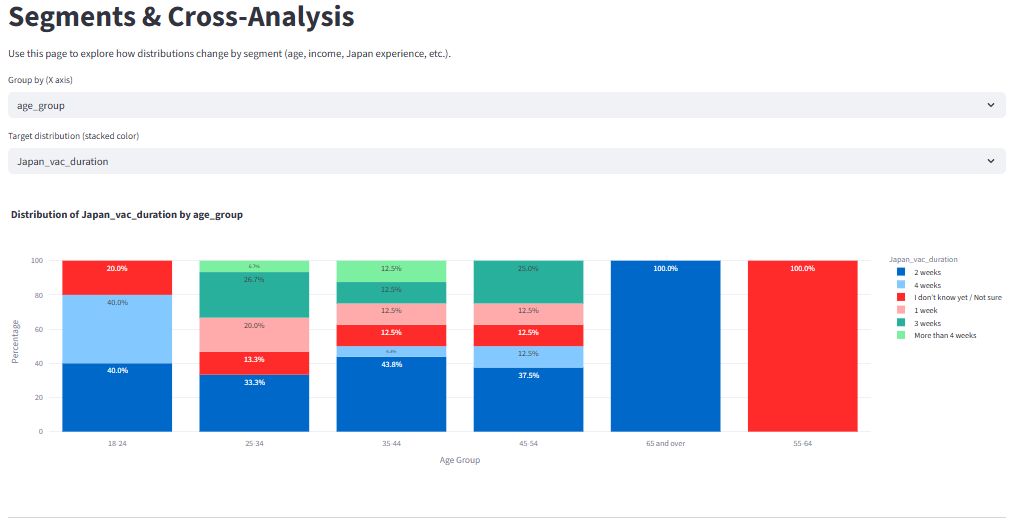
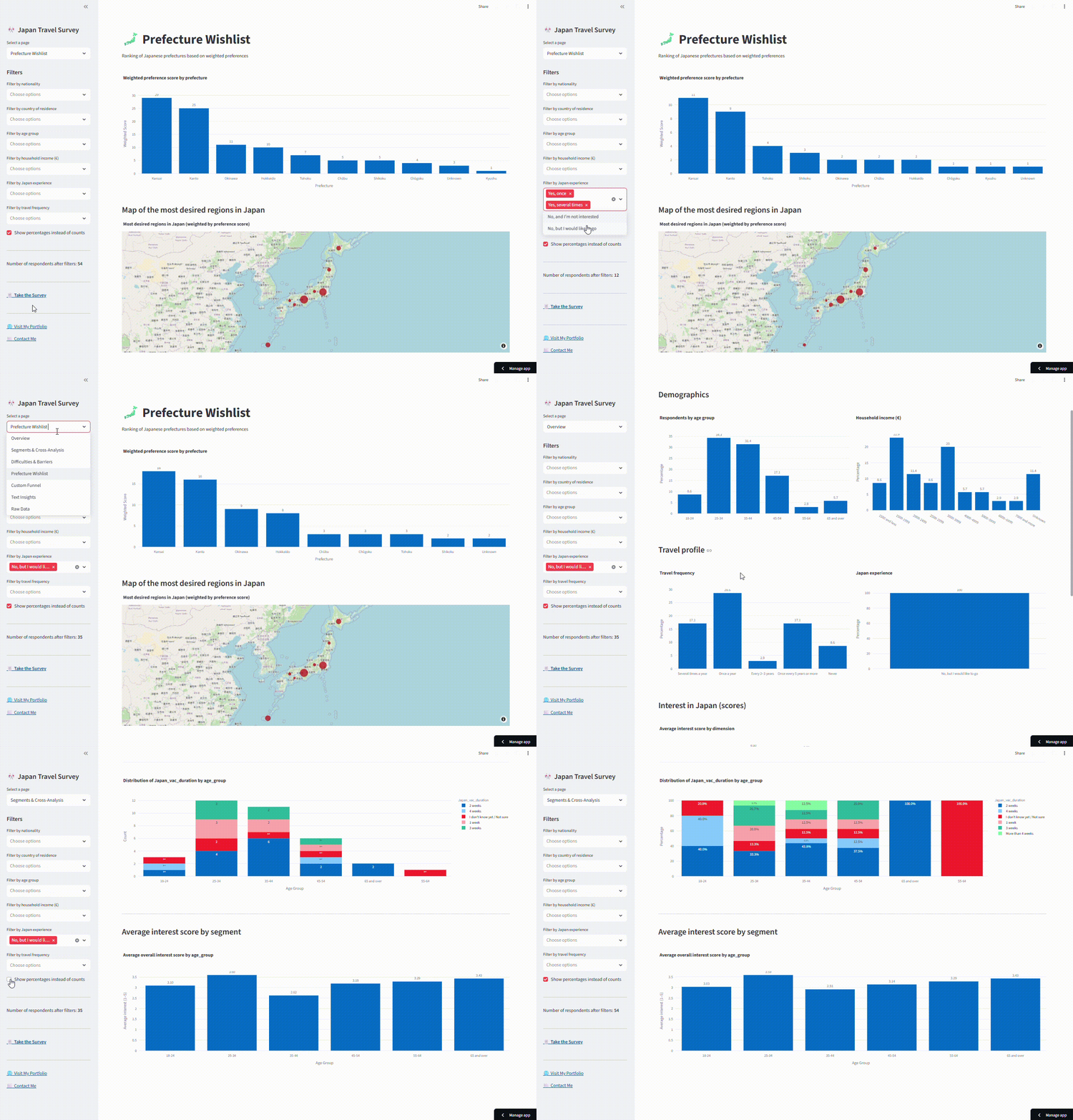
I built a Streamlit web app so non-technical users can explore insights through filters and visuals, without touching raw data or code. Because the dataset refreshes twice a month, the app remains fast and reliable with a caching strategy aligned to the refresh cycle.
View of the interactive dashboard
My Role & Key Skills Demonstrated
I handled the project end-to-end :
- Stakeholder context
- Survey design
- Pipeline engineering
- Automation
- Dashboard delivery
Key skills demonstrated include data modeling mindset (single source of truth), data quality and standardization, automation, product thinking (self-service UX), and business communication (turning responses into decisions).
Technologies Used








What’s Next
This project is designed as a foundation. Here are realistic evolutions that extend its value without changing the core architecture.
- Segment discovery: clustering traveler profiles to identify high-potential audiences and tailor messaging.
- Guided reporting: auto-generated PDF reports based on selected filters and key charts.
- Natural language analytics: a lightweight chatbot to query the dataset (e.g. “Top barriers for 18–25 from Europe”).
- Decision framework: turning insights into measurable campaign recommendations (hypotheses → tests → learnings).
Summary
Japan Travel Insights shows how a manual, local data collection process can be transformed into a scalable analytics product. By combining automated ingestion, strong standardization rules, and a stakeholder-friendly dashboard, the project turns survey answers into strategy-ready insights.
Because understanding travelers isn’t just about collecting answers — it’s about uncovering what truly guides their journey.