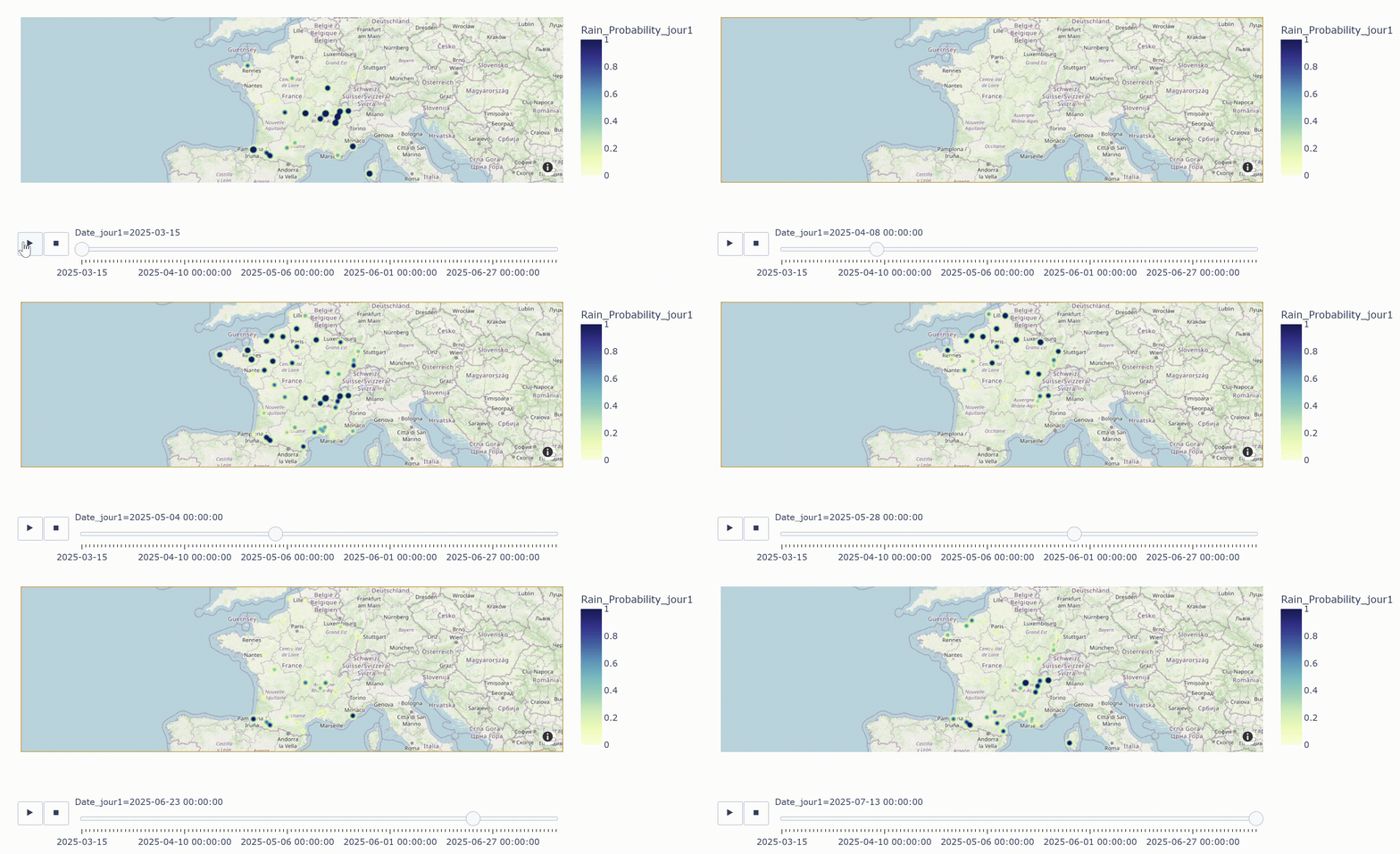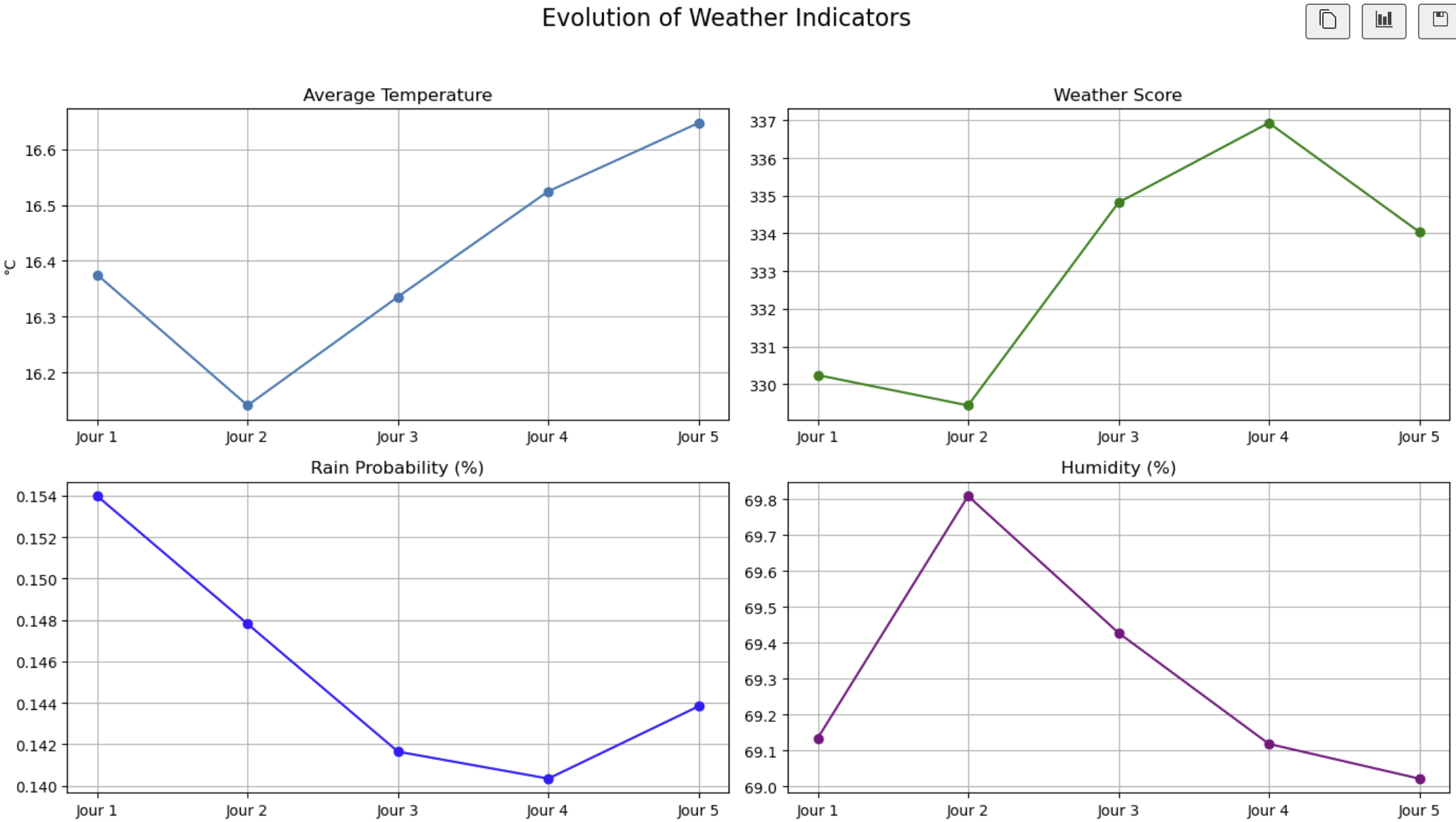
Weather Forecast Reliability Analysis for Travel Planning
Turning Weather Data into Smarter Travel Decisions
Executive Summary
In a world where weather heavily influences travel behavior,
we want to transform raw meteorological data into actionable insights.
Our goal is to help users choose their ideal weekend destination based
on weather reliability, while illustrating how data automation and
analytics can guide smarter real-world decisions.
Business Problem
Weekend travelers often make plans based on uncertain weather forecasts. This uncertainty impacts:
- User satisfaction (bad reviews, cancelled trips).
- Tourism business performance (fluctuating demand and occupancy rates).
- Operational forecasting (hotels, transportation, events).
From a business perspective, forecast reliability also influences pricing
strategies. If hotel owners can trust a 5-day forecast predicting rain,
they can lower room rates in advance to attract more bookings.
Conversely, in regions where forecasts are less reliable, they can wait
longer before adjusting prices, optimizing revenue once the weather trend
becomes clearer.
Solution Overview
The project consists of two complementary systems:
| Module | Description | Value |
|---|---|---|
| France Adventure Planner | A Streamlit web app recommending weekend destinations based on forecasted weather and hotel availability | Helps users plan better trips |
ClimAdvisor | A Power BI & Python analysis evaluating the accuracy of 5-day forecasts across 250+ French cities | Helps organizations assess forecast reliability & trends |
Business Impact
- 250+ destinations analyzed daily (mountain, coast, city).
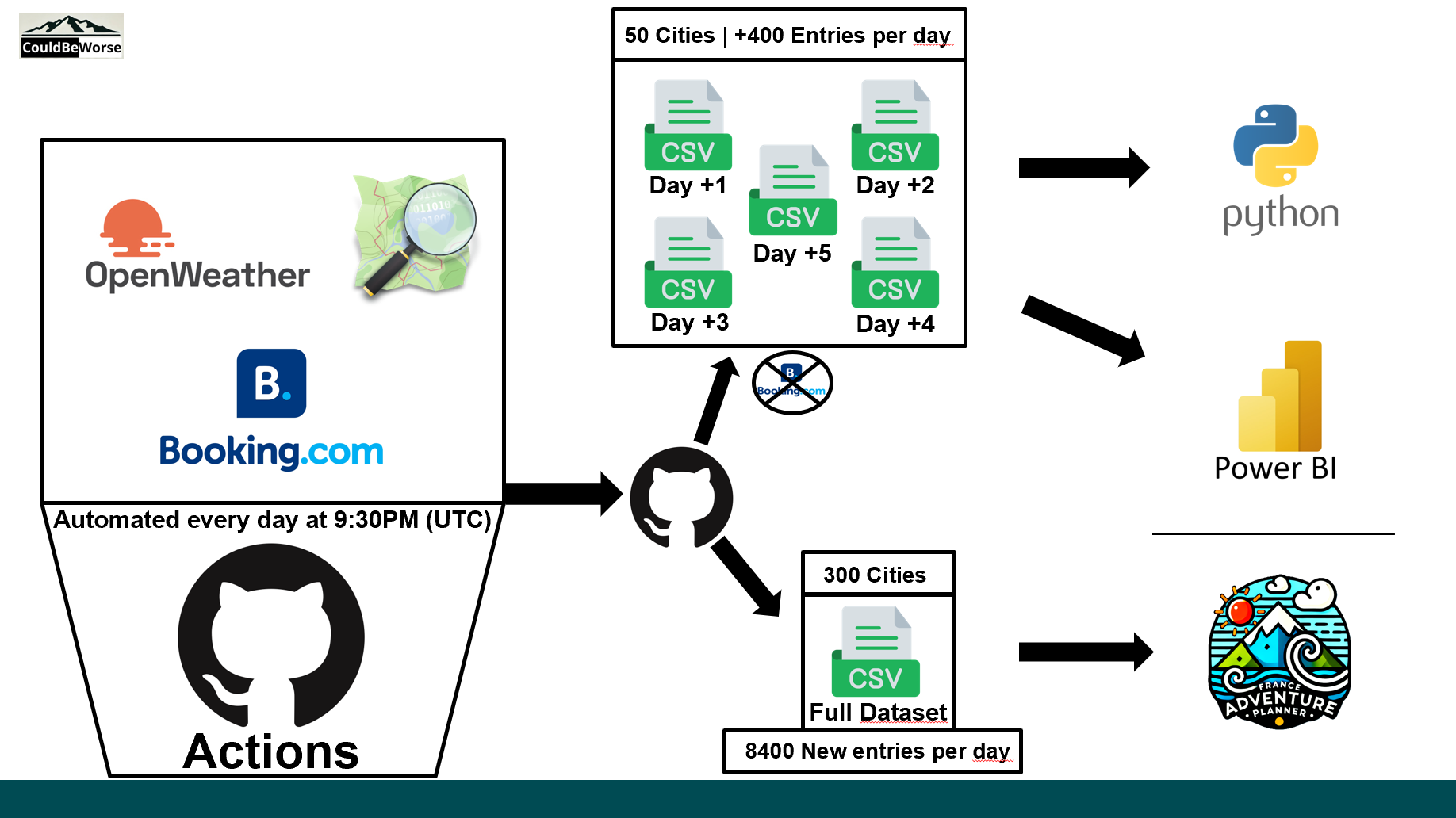
- 1,250+ forecasts/day processed and updated automatically.
- 100% automation (CI/CD pipeline with GitHub Actions).
- Weather reliability index created to assess forecast accuracy and confidence
- Interactive dashboards & app for personalized recommendations and strategic insights
These insights can support:
- Tourism boards and transport companies (anticipating demand).
- Media or travel apps (improving UX with data-backed recommendations).
- Users (simplifying travel decisions).
Together, these results demonstrate how reliable data can directly enhance user trust, operational forecasting, and dynamic pricing strategies.
Key Insights
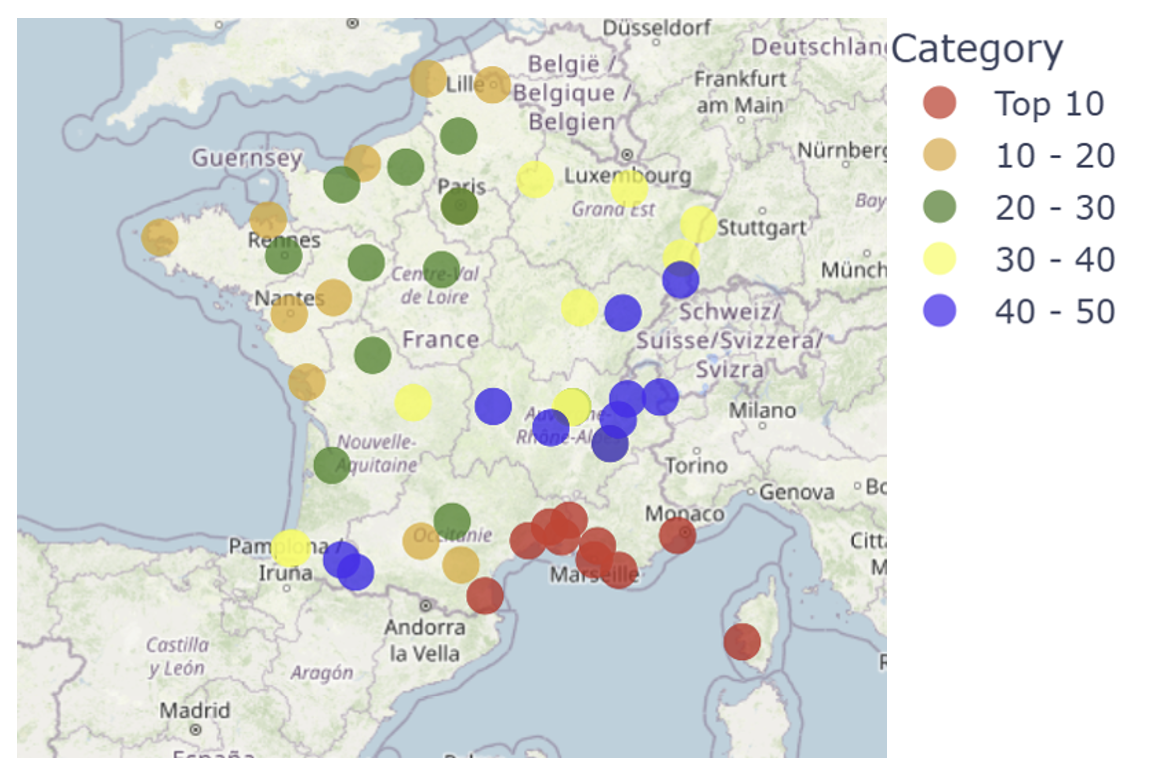
Forecast Reliability by Region
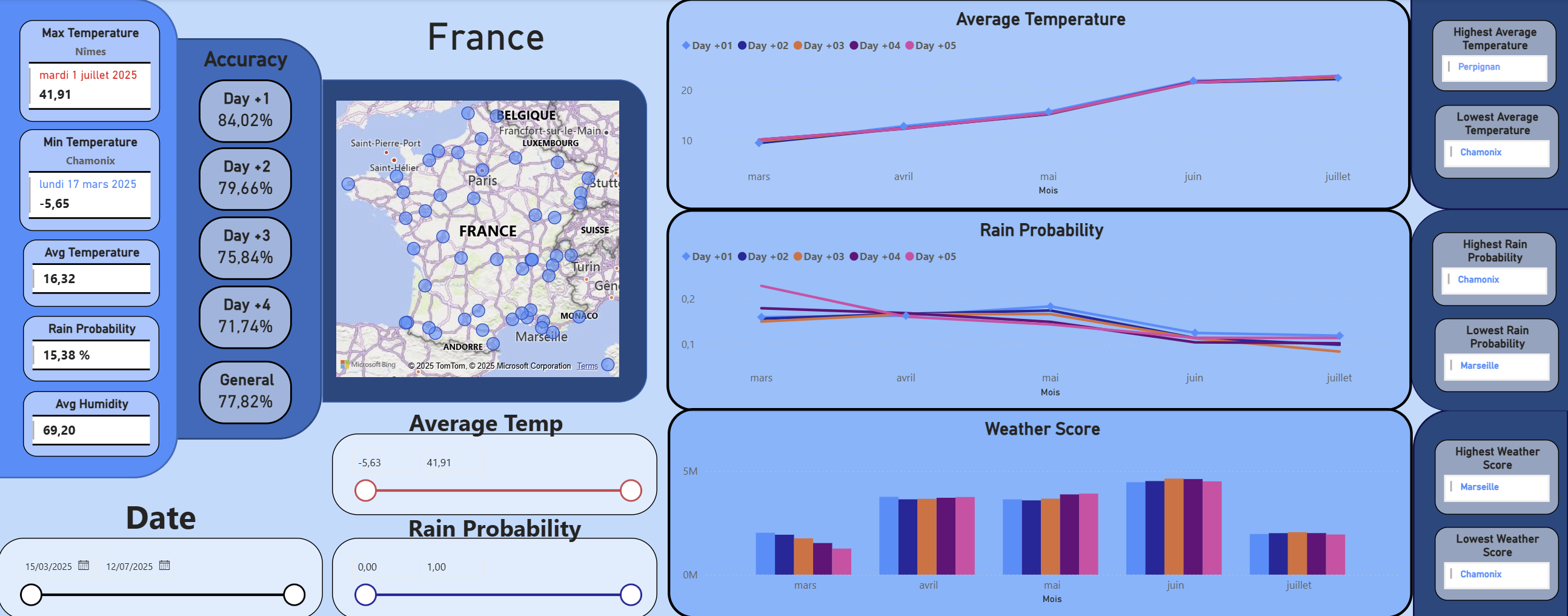
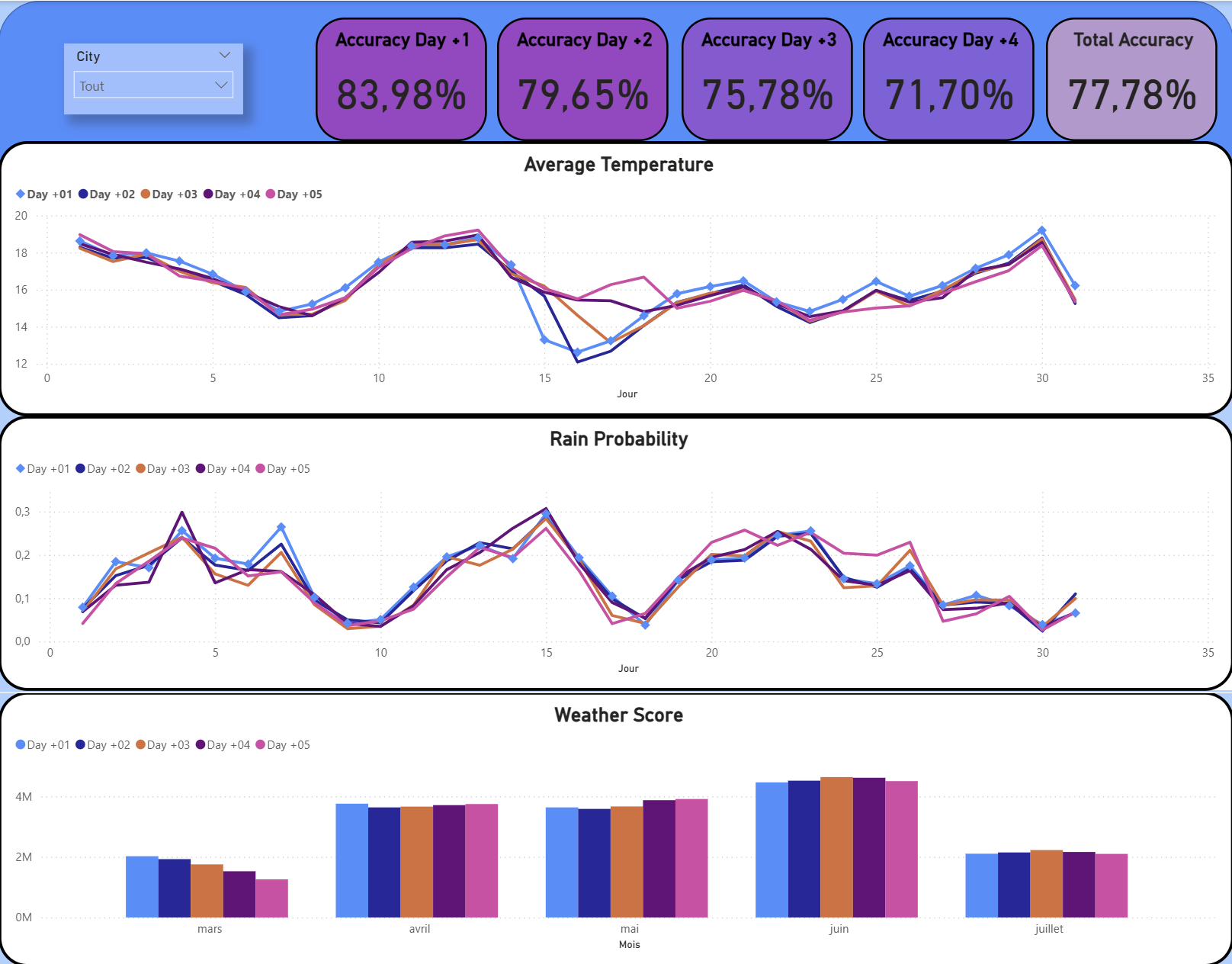
- Forecast accuracy drops by up to 10% beyond 72 hours, highlighting the need for short-range reliability indicators.
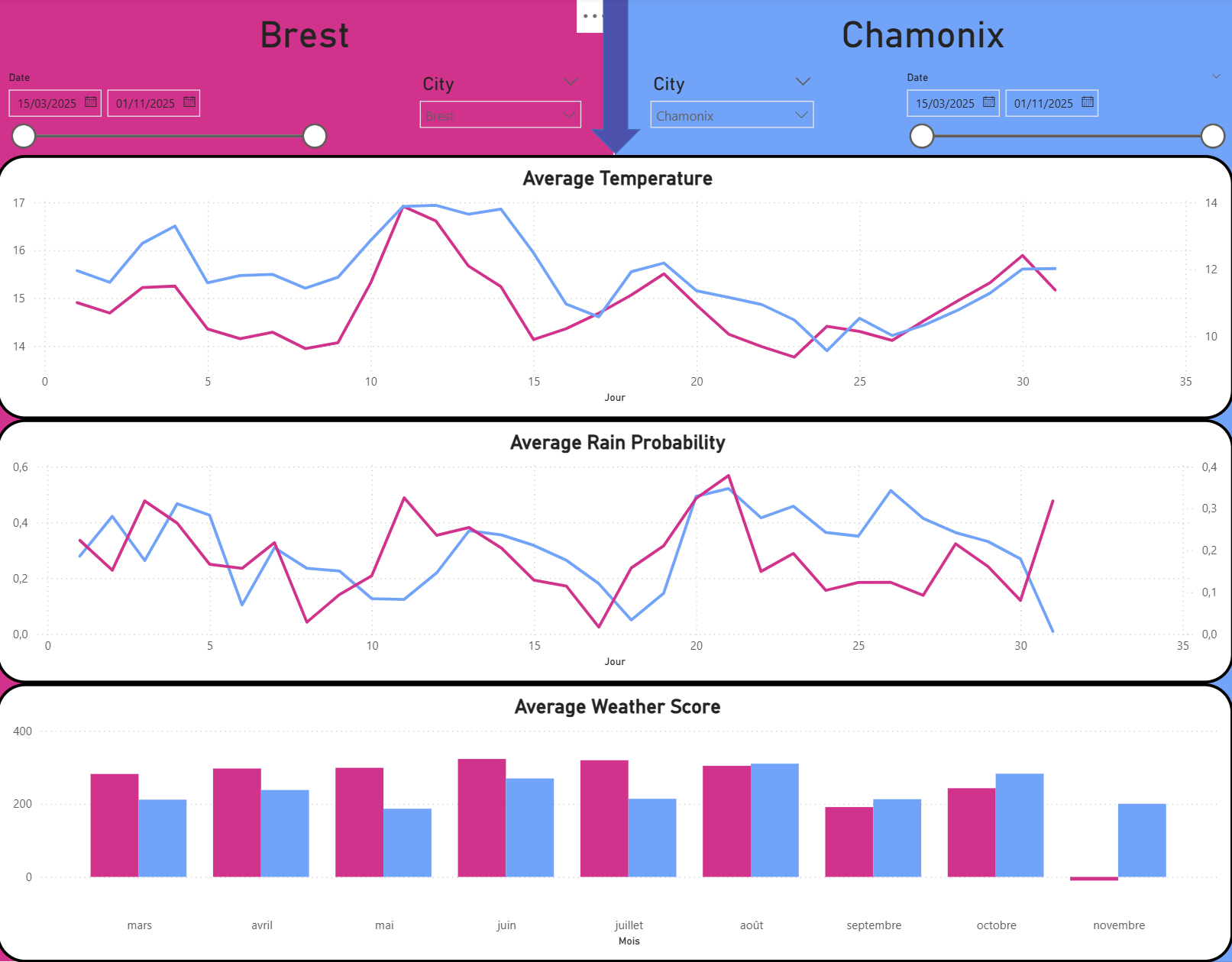
- Mountain regions show the strongest forecast variability due to microclimatic sensitivity, confirming the limits of long-term prediction models.
- A clear gap exists between perception and data — regions often considered “less predictable” can, in reality, demonstrate more consistent forecast accuracy.
The map highlights five distinct reliability groups — highest accuracy along the southern coast, with clear diagonal patterns emerging toward the north, while mountain regions show the lowest stability in forecasts.
Technologies Used










What’s Next
- Add an AI-driven recommendation model for “where to go next weekend”.
- Correlate weather data with tourism KPIs (hotel occupancy, train bookings).
- Extend analysis to European destinations using the same data model.
- Integrate forecast reliability alerts directly in the app.
Summary
This project demonstrates how data can bridge the gap between prediction and decision. By combining automation, analytics, and interactive design, it showcases my ability to:
- Translate data workflows into business value
- Deliver end-to-end solutions (from data collection to insights)
- Build tools that are both analytical and user-focused
Because good data doesn’t just describe the weather — it helps you decide where to go.